Indoor Cat Enrichment: Keep Your Cat Happy & Active
Indoor cats live safer, longer lives, but they can get bored without the stimulation an outdoor environment provides. Enrichment is about giving your cat ways to express natural behaviors — hunting, climbing, scratching, and exploring — inside your home. A little daily effort prevents many behavior problems and keeps your cat fit.
Why enrichment matters
Cats are predators with a strong drive to stalk, pounce, and chase. When those instincts have no outlet, cats can become overweight, anxious, or destructive. Bored cats may overgroom, meow at night, or scratch furniture. Regular enrichment gives them a healthy outlet and deepens your bond through shared play.
It is also one of the most effective ways to keep a cat at a healthy weight, since an active, engaged cat burns more energy than one that naps all day.
Vertical space and scratching
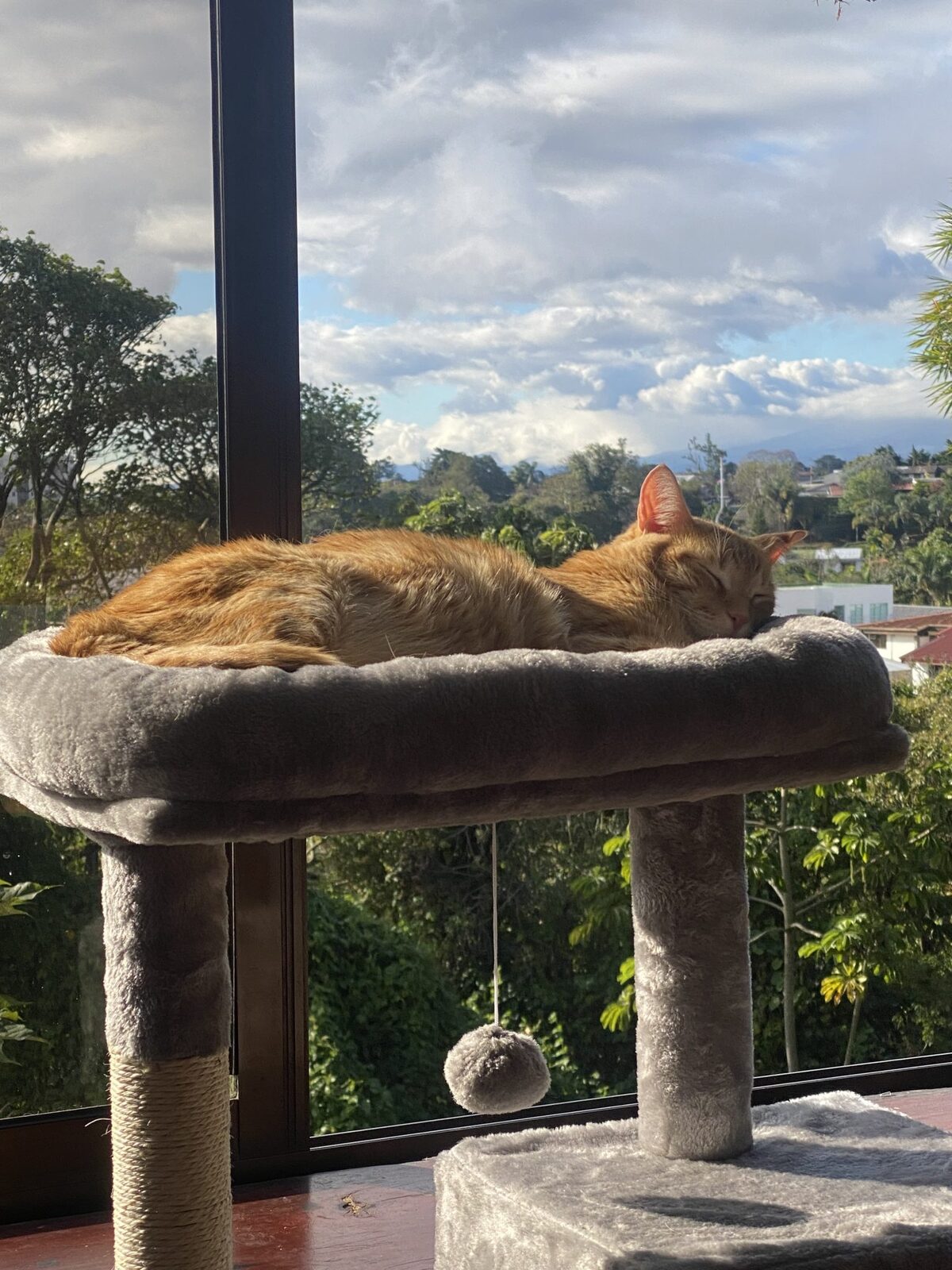
Cats feel safer and more confident when they can climb and observe from above. Provide vertical options at a range of heights:
- A sturdy cat tree with perches and hiding spots.
- Wall-mounted shelves or a window perch with a view of birds and passersby.
- Scratching posts in both vertical and horizontal styles, placed near resting spots.
Vertical territory is especially valuable in multi-cat homes, where it lets cats share space without conflict.
Anchor tall furniture to the wall so climbing is safe, and leave perches near windows, where most cats like to watch the outdoors. If you have multiple cats, provide more perches than cats so no one has to compete for the best spot.
Play that mimics hunting
The best play imitates a real hunt. Use a wand toy with a feather or toy mouse and move it like prey — darting, pausing, and hiding behind corners — then let your cat "catch" it at the end. Schedule two short sessions a day rather than one long one. Rotate toys weekly so they stay novel, and put toys away between sessions so your cat does not become bored with them.
End each play session by letting your cat catch and "kill" the toy, then offer a small treat or a meal. This completes the hunting sequence and leaves a cat feeling satisfied rather than wound up. Avoid using your hands or feet as toys, which teaches biting.
Food puzzles and foraging
Turn mealtime into an activity. Puzzle feeders, treat balls, and snuffle mats make cats work for food, which provides mental exercise and slows fast eaters. You can start simply by hiding a few kibble pieces around a room for your cat to find, then increase the difficulty. Foraging is one of the easiest ways to enrich a cat that is home alone during the day.
For cats new to puzzles, start easy — an open puzzle or a few treats scattered on the floor — so your cat learns the game instead of giving up.
Sensory and social enrichment
Cats explore with more than their eyes. Try these low-cost additions:
- Cat-safe plants or cat grass for nibbling.
- A bird feeder outside a window for "cat television."
- Cardboard boxes and paper bags to explore and hide in.
- Calm, gentle handling and grooming sessions for cats that enjoy touch.
- Rotating new scents and objects, such as a paper bag from a recent errand or a catnip toy, to keep the environment fresh.
Even a new cardboard box or a sprinkle of catnip in a new spot can be a small adventure for an indoor cat.
Build a daily routine
Cats thrive on predictability. Aim for a simple daily rhythm: a morning play session, food in a puzzle feeder during the day, and an evening hunt-and-catch session followed by a meal. Consistent enrichment keeps your indoor cat active, mentally sharp, and content — and it is one of the best ways to prevent problem behavior before it starts.