Cat Litter Guide: Types, Boxes & Best Practices
A clean, well-placed litter box keeps your cat comfortable and your home odor-free. Most litter-box problems come down to the wrong setup rather than a "bad" cat, so getting the basics right prevents most issues. This guide covers litter types, boxes, placement, and cleaning.
Types of cat litter
Cat litter falls into a few broad categories, each with trade-offs:
- Clumping clay litter is the most popular — it forms easy-to-scoop clumps and controls odor well, but it is dusty and not flushable.
- Non-clumping clay litter is inexpensive and absorbent but needs full replacement more often.
- Silica gel (crystal) litter absorbs moisture and controls odor for weeks but is pricier and does not clump.
- Natural litters made from pine, corn, wheat, or paper are biodegradable and often low-dust, though some cats dislike their texture.
Cats have strong preferences, so if you change litter, do it gradually by mixing the new type into the old over a week or two.
Whichever type you choose, start with an unscented, low-dust formula. Cats have a far stronger sense of smell than people, and heavy fragrances or dusty litters are common reasons a cat avoids the box. If odor is a concern, scoop more often rather than adding scent.
Choosing the right box
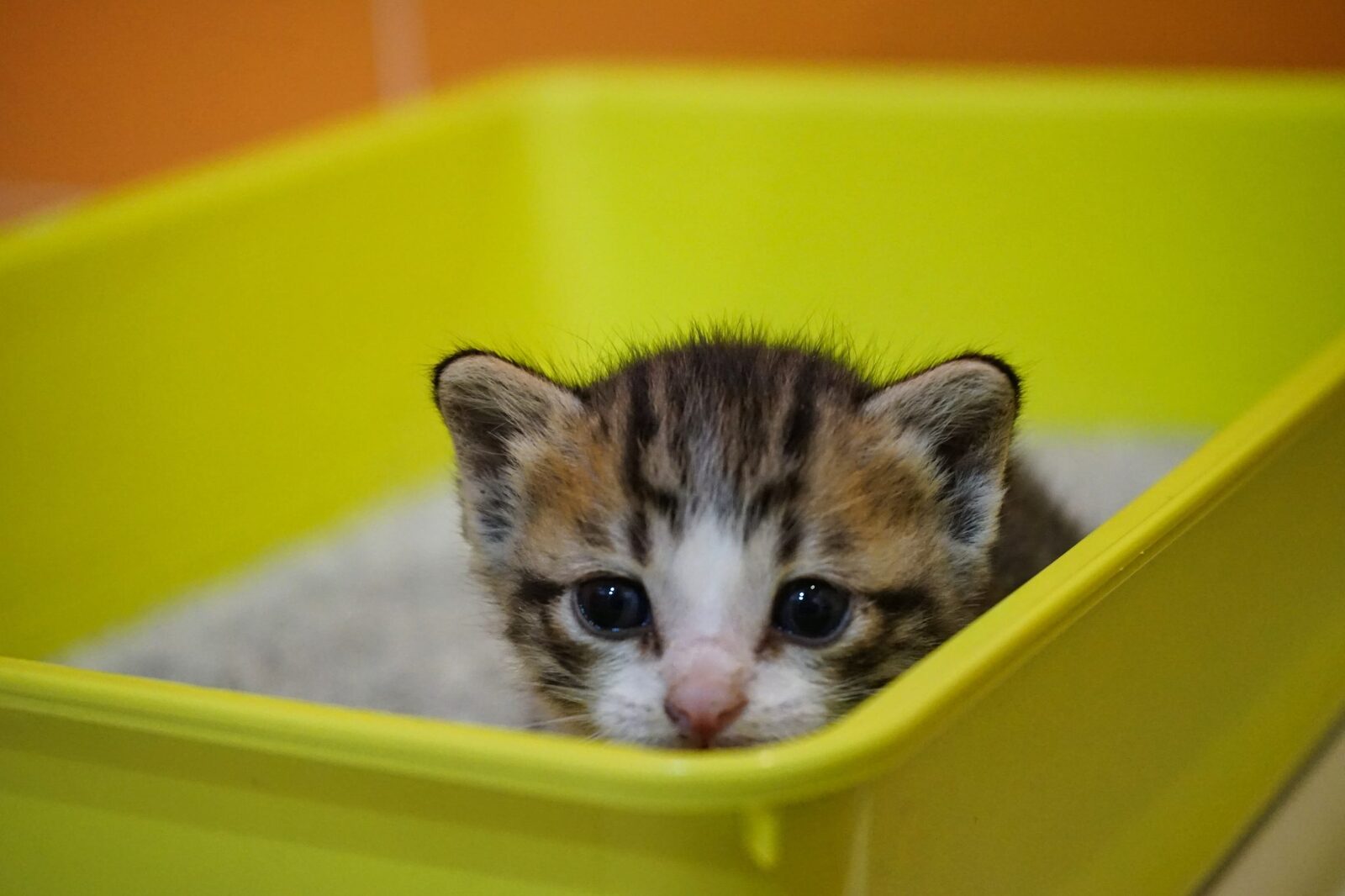
Pick a box that is about one and a half times the length of your cat so it can turn around comfortably. Most cats prefer an open box that lets them watch for threats; covered boxes trap odor for humans but can feel confining and trap smells your cat finds unpleasant. For kittens, older cats, or cats with arthritis, choose a low entry so it is easy to step in and out. A good rule of thumb is one box per cat, plus one extra, placed in different areas.
Placement matters
Location can make or break litter-box use. Put boxes in quiet, low-traffic spots away from food and water bowls and away from noisy appliances like washers and dryers. Spread boxes across different floors of a multi-level home so a cat never has to travel far. Avoid trapping a box in a corner where a cat could feel cornered by another pet. If you have a multi-level home, keep a box on each level, and never place one where a door can swing shut and startle a cat mid-use.
Cleaning routine and odor control
Scoop solid waste and clumps at least once or twice a day. Top up litter as needed, and empty, wash, and fully replace the litter on a regular schedule — weekly for non-clumping litter, and every two to four weeks for clumping. Wash the box with mild, unscented soap and avoid harsh chemicals and ammonia, which can smell repellent to cats. If odor is a problem, scoop more often rather than relying on heavily scented litters or deodorizers.
Keep a scoop, a spare box, and a small broom near each litter station so cleaning stays quick. Replace scratched plastic boxes about once a year, since deep scratches trap odor and bacteria that are hard to wash out.
Troubleshooting common problems
If your cat stops using the box, treat it as a signal:
- Rule out medical issues first — straining or frequent trips can indicate a urinary problem that needs a vet.
- Add a box or move one to a quieter spot.
- Clean accidents with an enzymatic cleaner to remove the scent completely.
- Reconsider the litter type, box size, or cleaning frequency if the cat was previously reliable.
A cat that suddenly avoids the box usually has a reason; address the setup and health before assuming it is behavioral.
For a new kitten or cat, keep the box in the same quiet spot while it settles in — consistency in those first weeks prevents most accidents.