Puppy Care Guide: The First Year
Bringing home a puppy is exciting, but the first year sets the pattern for the dog's whole life. What you do in those early months — how you feed, socialize, house-train, and care for your puppy — shapes its health and temperament for years. This guide walks through each stage, from the first week at home through the transition to adult food.
The first week at home
Before the puppy arrives, puppy-proof your home: put away electrical cords, secure trash cans, and remove anything small enough to swallow. Set up a crate or a quiet, enclosed space with bedding, and choose a spot for food and water.
Keep the first few days calm. Introduce the puppy to its crate, yard, and immediate family slowly, and establish a schedule for meals, potty breaks, play, and sleep. A predictable routine helps a puppy feel secure and makes house training much faster.
Feeding and growth
Puppies grow quickly and need a complete puppy or all-life-stages food. Large breeds should eat a large-breed puppy formula, which is calibrated to slow growth and protect developing joints. Feed three or four small meals a day at first, then reduce to twice daily as the puppy approaches six months.

Use a measuring cup and follow the feeding guide as a starting point, adjusting to keep your puppy lean. Rapid, pudgy growth in a large-breed puppy can strain developing bones and joints.
The socialization window
The first 12 to 16 weeks are the critical period for socialization. During this window, a puppy is especially open to forming positive associations with new experiences. Expose your puppy gently to different people, calm vaccinated dogs, car rides, household sounds, and new surfaces — always pairing each one with treats and a relaxed tone.
Aim for short, positive exposures rather than a flood of novelty. The goal is confidence, not exhaustion. Well-socialized puppies grow into dogs that handle new situations without fear or aggression.
Vaccinations and vet visits
Puppies need a series of vaccinations, typically starting around six to eight weeks and continuing every few weeks until about 16 weeks. Your veterinarian will also start parasite prevention and check for common puppy issues. Follow the schedule your vet gives you, and ask when it is safe to take your puppy to public places where other dogs go.
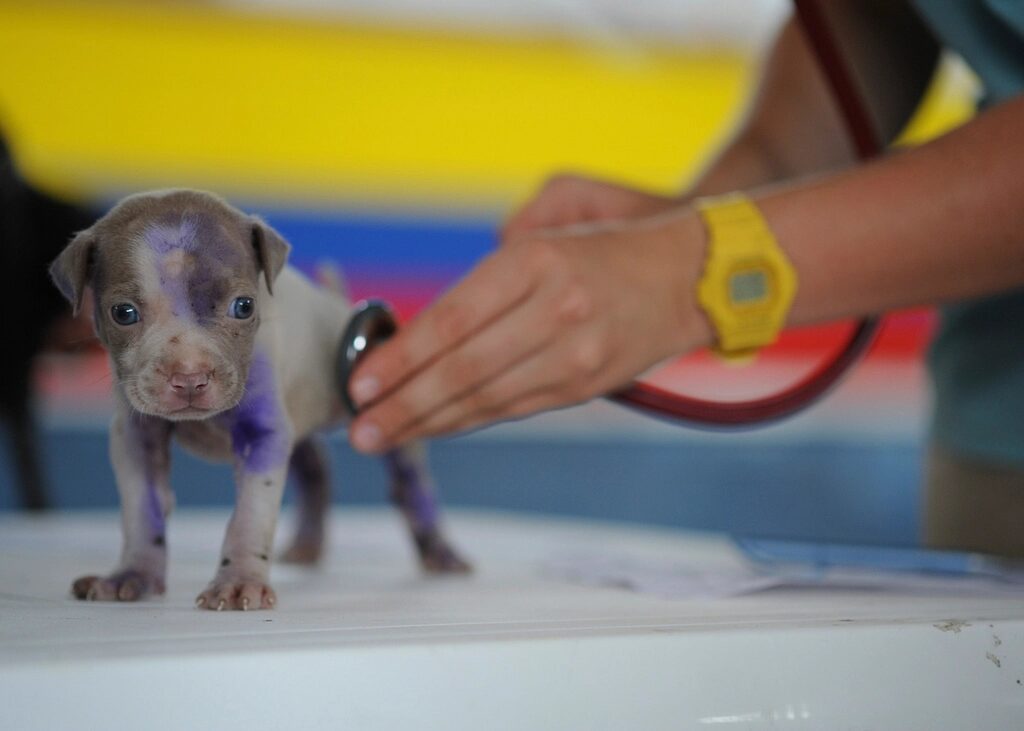
Keep a record of shots and deworming, and watch for signs that need a vet visit: vomiting, diarrhea, lethargy, loss of appetite, or a cough.
House training, teething, and chewing
Take the puppy outside on a consistent schedule — after waking, after meals, after play, and before bed — and reward elimination outside immediately. Supervise indoors or use a crate, because puppies rarely soil their sleeping area. Accidents will happen; clean them with an enzymatic cleaner and never punish a puppy for a mess you did not catch in the act.
Puppies also chew heavily while teething, usually between three and six months. Provide appropriate chew toys and redirect the puppy from furniture or shoes every time. Rotate toys to keep them interesting, and remove anything you do not want chewed from reach.
The transition to adult food
Between 9 and 12 months — later for large and giant breeds — switch gradually from puppy food to an adult formula over seven to ten days. Your veterinarian can confirm the right timing based on your puppy's breed and size. By the end of the first year, most dogs are ready to settle into the adult routine of feeding, exercise, and preventive care they will follow for life.