French Bulldog: Personality, Care & Breed Guide
French Bulldogs — "Frenchies" — are compact, muscular dogs with oversized bat ears and an easygoing, comedic personality. They have become one of the most popular breeds in American cities, largely because they adapt well to apartment life and need less exercise than many dogs. That low-energy lifestyle comes with specific care demands, especially around heat, breathing, and skin, that every prospective owner should understand first.
Personality and temperament
Frenchies are affectionate, playful, and people-focused. They bond closely with their owners and often prefer to be wherever the family is, which makes them prone to separation anxiety if left alone too long. They are generally good with children and other pets but can be stubborn, so training rewards patience and consistency over force.
They are alert and will usually let you know when someone is at the door, but they are companion dogs, not guard dogs. Most are happiest curled up on a lap between short bursts of play.
Exercise needs
A French Bulldog needs far less exercise than a working breed. Two short walks of 15 to 20 minutes a day, plus indoor play, is usually enough for an adult. Keep sessions gentle and avoid exercising a Frenchie in heat or high humidity, because the breed's flat face makes panting less effective at cooling.
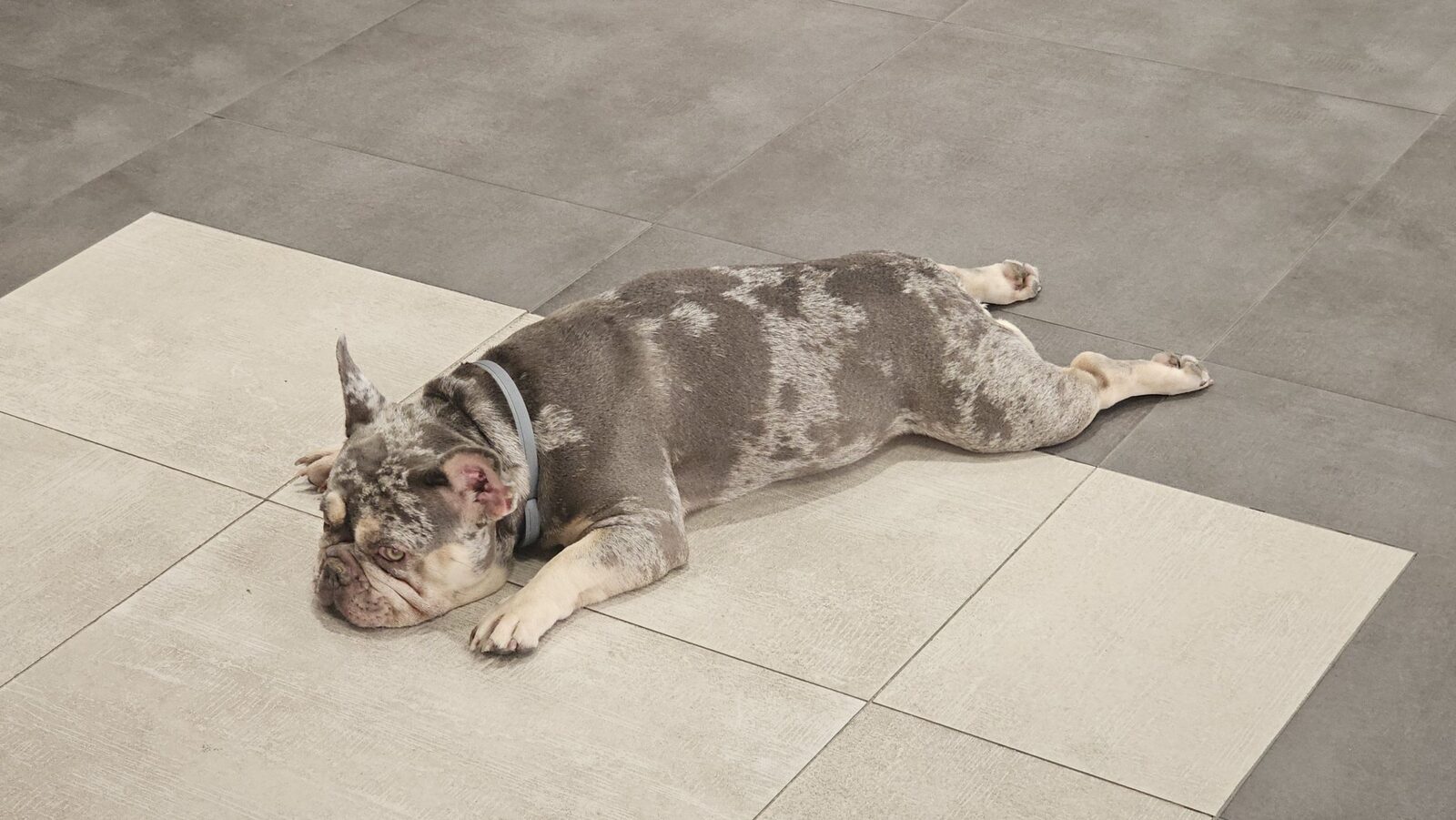
Pay attention to breathing during any activity. If a Frenchie starts to snort heavily, slows down, or seeks shade, the walk has gone too far. Brachycephalic (flat-faced) dogs can overheat quickly, so carry water and schedule exercise for cooler parts of the day.
Grooming and skin care
Frenchies have a short, fine coat that is easy to brush once or twice a week with a rubber curry or soft bristle brush. They shed moderately and do not need frequent baths; every four to six weeks is usually enough unless they get dirty.
The real work is skin and folds. The wrinkles on a Frenchie's face can trap moisture, food, and dirt, leading to irritation or infection. Wipe the folds gently with a soft, damp cloth and dry them thoroughly every few days. Clean the ears weekly, keep the tail pocket (if present) dry, and watch for redness or odor, which can signal a skin problem.
Training
Frenchies are smart but independent, so training works best in short, upbeat sessions with high-value treats. They respond poorly to repetition and harsh correction; if a session stalls, end on a success and try again later. Teach basic cues such as sit, stay, and a reliable recall, and socialize early to prevent wariness of strangers and other dogs.

House training can take longer with this breed, so set a consistent schedule, reward outdoor elimination immediately, and supervise closely indoors.
Health considerations
The breed's flat face is at the center of its most common health issues. Frenchies can suffer from brachycephalic obstructive airway syndrome (BOAS), which affects breathing, especially in heat or during stress. They are also prone to spinal problems such as intervertebral disc disease, skin allergies, and eye conditions. Their body shape makes natural whelping difficult, and many litters are delivered by cesarean section.
Ask a breeder about health testing for the parents — including spine, hips, and eyes — and budget for the possibility of higher-than-average veterinary costs. Pet insurance is worth considering before any condition is diagnosed.
Is a French Bulldog right for you?
A Frenchie is a great match for a homebody or city dweller who wants a low-exercise, affectionate companion and can afford the breed's potential health costs. They are a poor fit for households that want a jogging partner, leave the dog alone all day, or live somewhere hot without air conditioning.